
What are the benefits of coloring Bee in garden Coloring Page?
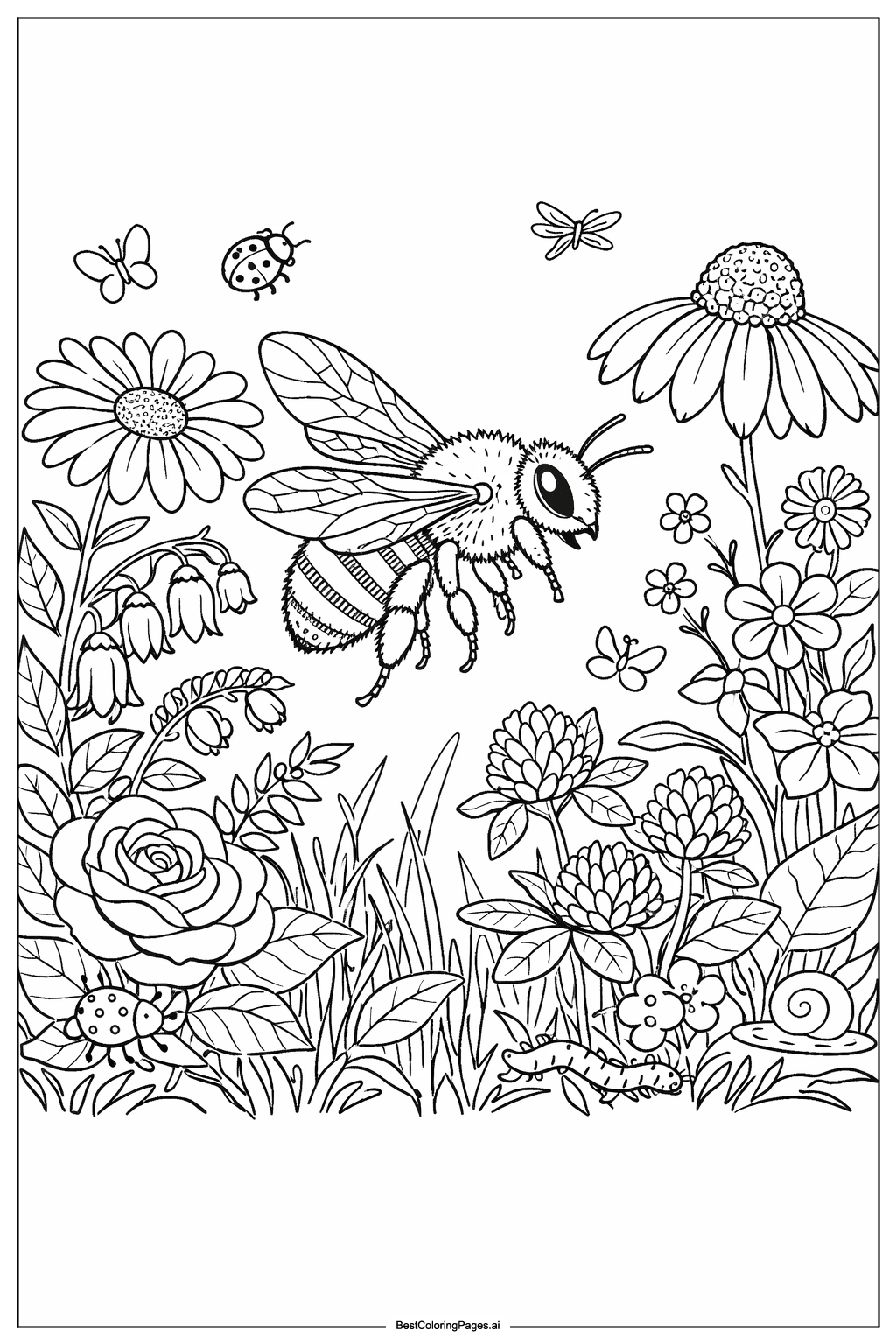
Coloring this lively garden scene offers wonderful developmental benefits for children. First, it improves fine motor skills. Holding pencils and staying within the complex lines of the grass and flower petals strengthens hand muscles and coordination. Second, it promotes mindfulness and focus. Because there are so many details—like the ladybugs, snail, and different leaf shapes—children must pay close attention, which helps calm the mind and improve concentration spans. Third, it serves as a fun nature lesson. Parents or teachers can use this page to teach kids about the ecosystem. You can identify the different species together, such as the rose, clover, and bluebells, and discuss how bees play a vital role in pollinating these plants. Finally, it encourages creativity. There are no wrong colors for a magical garden, allowing children to express themselves freely through their artistic choices.
How difficult is it to color Bee in garden Coloring Page, and what tips can help?
What are the best color suggestions for Bee in garden Coloring Page?
Start by coloring the bee to make it pop! Use bright yellow and deep black for its stripes. You can use a very light blue for the wings, or leave them white and add a little glitter to make them sparkle. For the flowers, try to use a variety of colors to make the garden look vibrant. You could color the rose red or pink, the daisies white with yellow centers, and the clovers in soft purple. When coloring the background, be careful with all the green. Try using a light green for the grass blades and a darker forest green for the flower leaves. This helps separate the plants so they don't blend together. Don't forget the tiny bugs! The ladybugs look great in red, and the snail could be brown or orange. Take your time with the small details.