What are the benefits of coloring Tiger sitting Coloring Page?
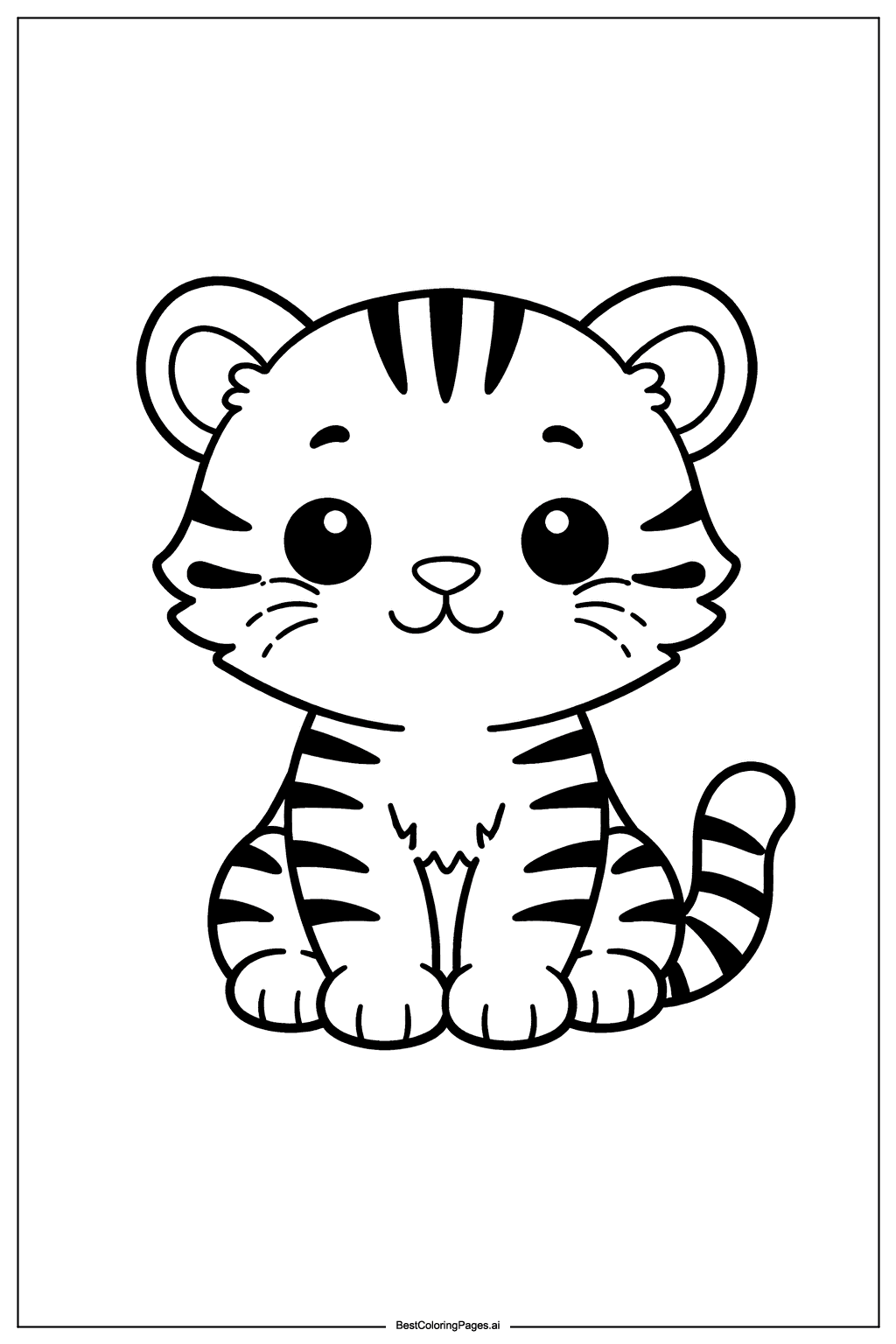
Coloring this cute tiger offers several wonderful benefits for young artists. First, it is an excellent way to improve fine motor skills. The act of coloring inside the small stripes and around the eyes requires steady hand movements and precise grip control. Second, it encourages focus and patience. Because there are many distinct patterns on the tiger's body, children must pay attention to detail to ensure the colors don't mix where they shouldn't. Lastly, it sparks creativity and emotional connection. The tiger's friendly face makes the activity enjoyable and relaxing, reducing stress. Children can also learn about wildlife and nature while experimenting with different color combinations, boosting their artistic confidence.
How difficult is it to color Tiger sitting Coloring Page, and what tips can help?
What are the best color suggestions for Tiger sitting Coloring Page?
For a realistic tiger look, use a bright orange for the main parts of the body and the top of the head. Keep the muzzle (the part around the nose and mouth), the chest, the tummy, and the insides of the ears white. This creates a beautiful contrast! For the stripes, use a deep black or dark brown marker to make them stand out clearly against the orange fur. You can color the nose a soft pink to make him look extra cute. If you want to be creative, who says a tiger has to be orange? You could make a snow tiger using light blues and greys, or a fantasy tiger using purple and pink. *Tip:* Try to color the background with green leaves or grass so the tiger feels at home in the jungle!