What are the benefits of coloring duck waving Coloring Page?
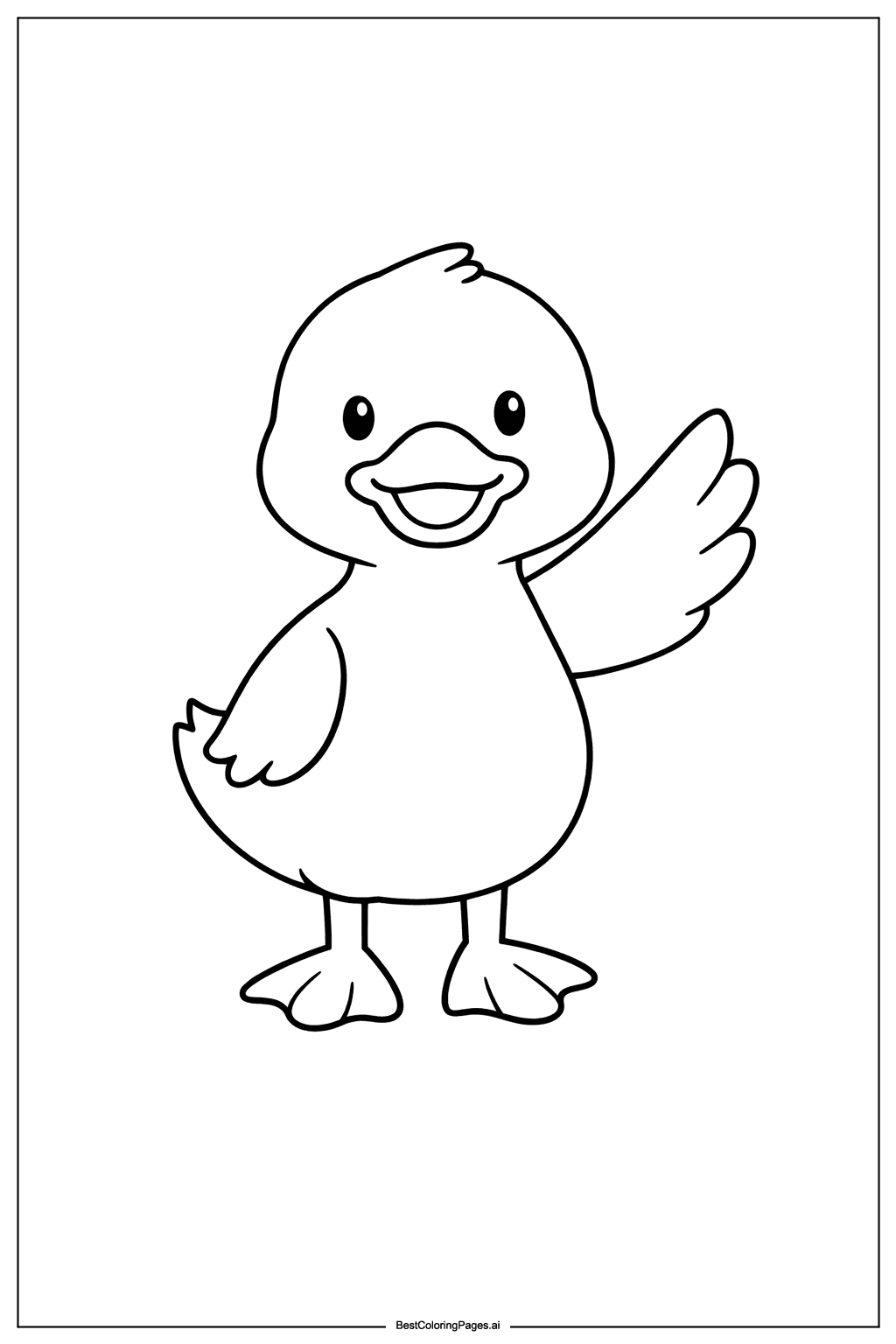
Coloring this page offers a wonderful mix of fun and learning. First, it helps children practice fine motor skills, specifically hand-eye coordination, as they navigate the curved lines of the duckling’s round body and wing tips. Secondly, the image promotes social emotional learning. The waving gesture introduces the concept of greetings, friendship, and non-verbal communication in a friendly way. Finally, it sparks creativity and storytelling. Children can imagine who the duck is waving to or where he lives. Is he at a pond? Is he at a park? Drawing a background requires imagination, turning a simple coloring activity into a creative art project.
How difficult is it to color duck waving Coloring Page, and what tips can help?
What are the best color suggestions for duck waving Coloring Page?
Ducks are traditionally yellow, so grabbing a bright sunshine yellow crayon or marker is a great start for the body. However, don't be afraid to get creative! For the beak and feet, a vibrant orange works best to make them stand out. When coloring the mouth, try using a light pink or red for the inside to show he is really smiling. To add some depth, you can use a slightly darker yellow or light orange to color under his wings and chin—this is called shading and makes him look round and fluffy. For the eyes, keep them black but be very careful to leave the tiny white bubbles uncolored; this gives him that sparkling, happy look! Since the background is empty, you can draw a scene for him. Maybe draw some blue water puddles, green reeds, or a bright sun in the sky to show it's a beautiful day.