What are the benefits of coloring Deer in snow Coloring Page?
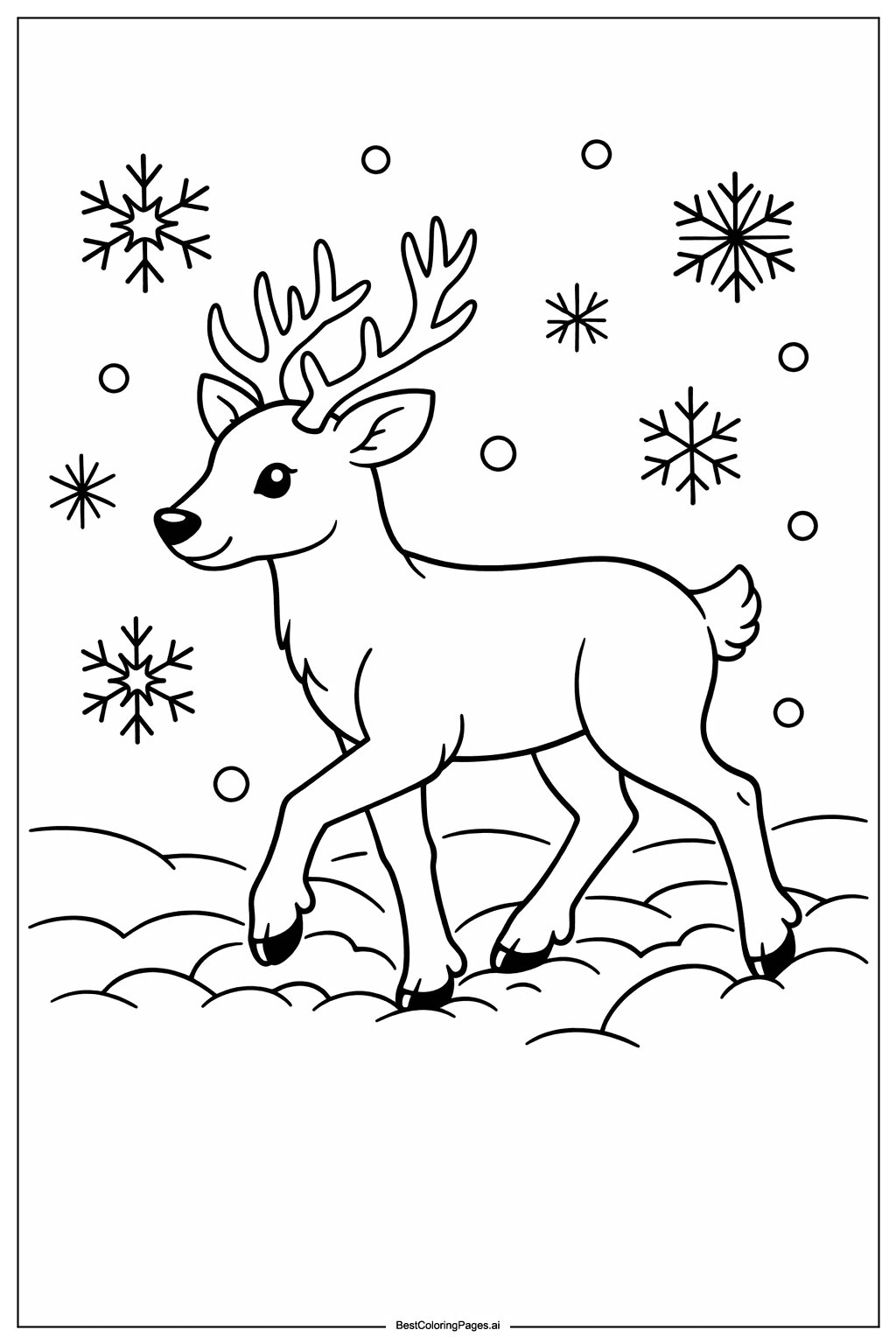
Coloring this winter scene offers several wonderful benefits for children. First, it is excellent for developing fine motor skills. The tiny details, such as the geometric snowflakes and the deer's slender legs, require precise hand movements and good grip control. This helps strengthen the muscles used for writing. Secondly, this picture encourages creative thinking about color. Since snow is technically white, children are challenged to find other ways to show color, such as using pale blues or purples for shadows. This introduces the artistic concept of shading and light reflection. Thirdly, the scene is calm and peaceful. Focusing on such a serene image can lower stress levels and provide a quiet moment of mindfulness. It helps children practice patience as they fill in the large background areas and the intricate details. Finally, it sparks curiosity about nature, leading to questions about how animals live and stay warm during the cold winter months.
How difficult is it to color Deer in snow Coloring Page, and what tips can help?
What are the best color suggestions for Deer in snow Coloring Page?
To make this winter scene pop, start by choosing a warm color for the deer, like a soft tan, light brown, or even a reddish-brown. You can use a darker brown for the hooves and the nose to create a nice contrast. For the snow, you don't have to leave it perfectly white! Try using a very light blue or lavender pencil to gently shade along the curved lines of the snowdrifts. This will give the snow depth and make it look fluffy. For the snowflakes, you can use a bright blue or leave them white and color the sky around them in a soft gray or blue. If you have them, silver or blue glitter pens are perfect for adding a magical sparkle to the falling snow. Finally, try using short, small strokes when coloring the deer's body to give the impression of fur. This adds a lovely texture to the animal.