What are the benefits of coloring Baby deer Coloring Page?
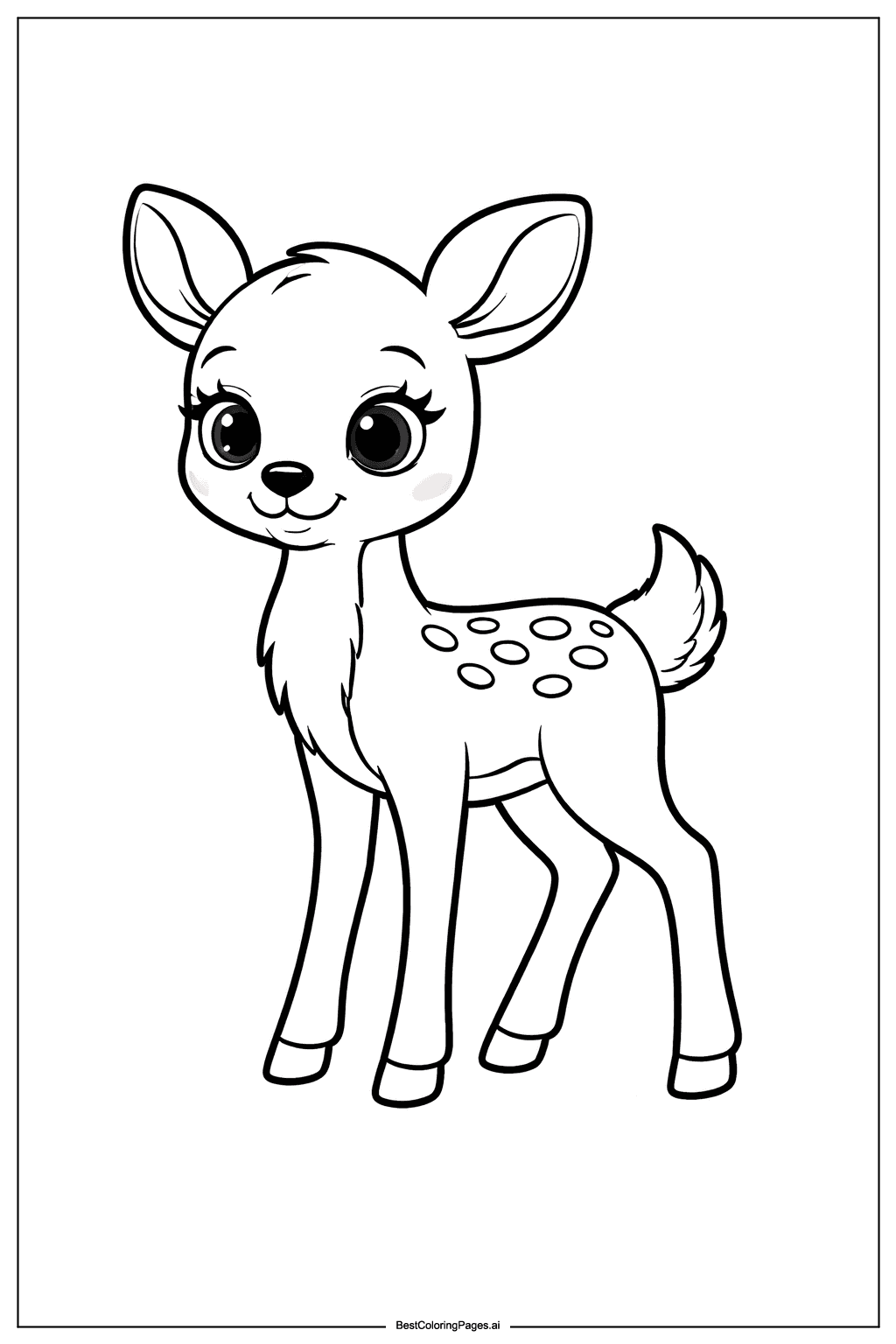
Coloring this baby fawn offers wonderful developmental benefits for young artists. First, it significantly improves fine motor skills. Navigating around the small spots on the back and the delicate eyelashes requires precise hand movements and good pencil grip. This practice helps strengthen the muscles in the fingers and hands used for writing. Secondly, this activity promotes concentration and focus. To make the deer look its best, children must pay close attention to the boundaries of the lines, especially around the eyes and ears. This helps increase their attention span. Lastly, it encourages emotional expression and relaxation. The cute nature of the character naturally brings joy, and the rhythmic motion of coloring is known to be calming. It allows children to make creative decisions—choosing whether to make a realistic brown deer or a colorful fantasy creature—which boosts their artistic confidence and imagination.
How difficult is it to color Baby deer Coloring Page, and what tips can help?
What are the best color suggestions for Baby deer Coloring Page?
For a realistic look, start with a light brown or tan color for the main body of the deer. You can use a darker brown for the hooves to make them stand out. The spots on the back look best if you leave them white or color them a very pale cream. For the face, try using a soft pink for the inside of the ears and a little circle of pink on the cheeks to make the fawn look shy and sweet. When coloring the eyes, be very careful! Use a dark black or deep brown, but make sure to leave the little white circles empty so the eyes shine. If you want to be creative, you don't have to use brown! This could be a magical forest spirit. Try using pastel blue or lavender for the body, with silver or gold spots. Using colored pencils is recommended for the small details like the eyelashes, while crayons work great for the larger body parts.