What are the benefits of coloring Crocodile family on riverbank Coloring Page?
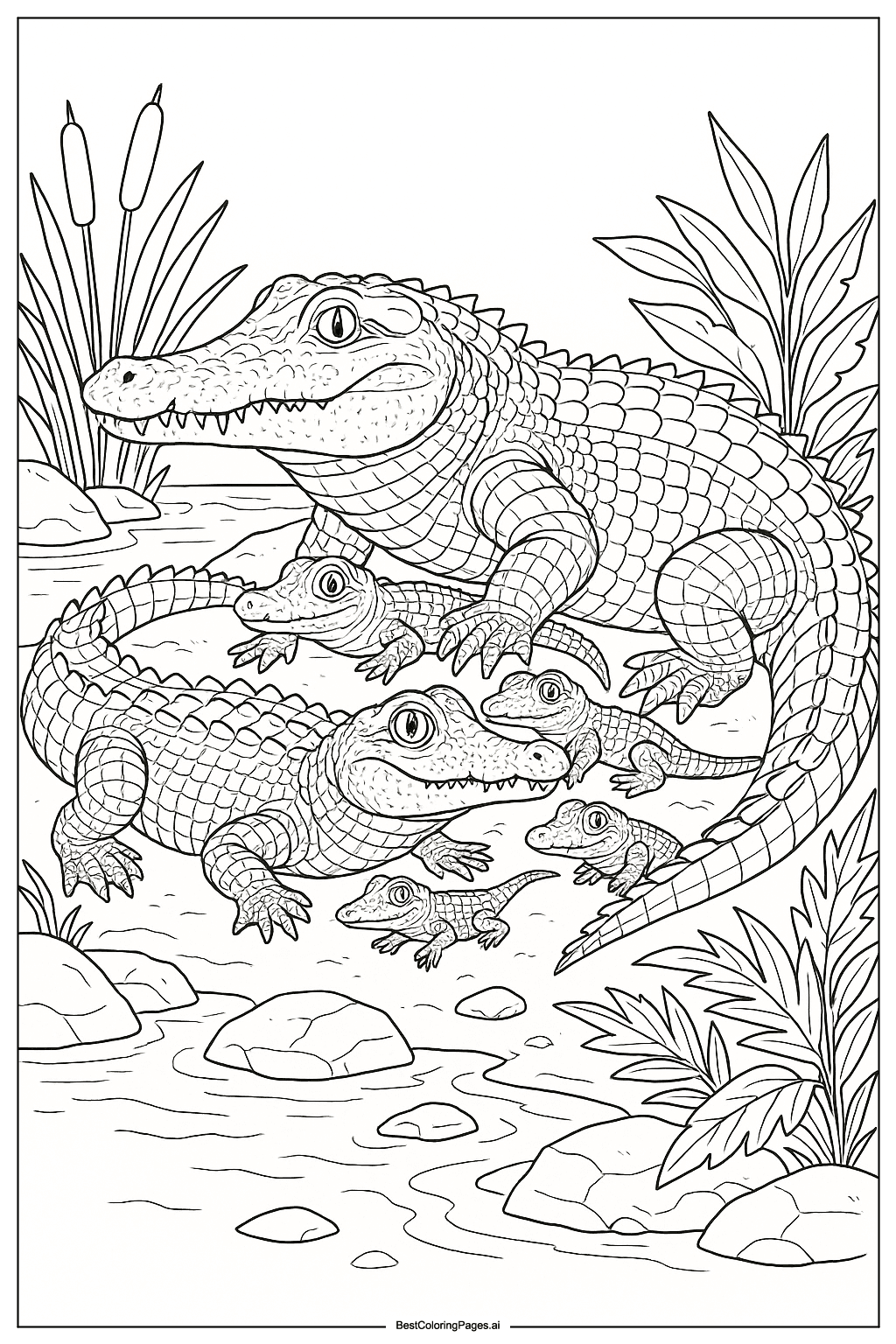
Coloring this crocodile family is a fantastic way to improve fine motor skills and hand-eye coordination. The detailed scales on the large crocodile require careful hand movements, which helps strengthen the small muscles in the fingers and hands. This activity also builds patience and focus, as filling in the textured skin takes time and attention to detail. Beyond physical skills, this page teaches children about nature and animal families. It encourages curiosity about how reptiles live, nest, and how parents protect their young in the wild. It allows kids to express their creativity by imagining what a real river habitat looks like, blending art with a love for wildlife.
How difficult is it to color Crocodile family on riverbank Coloring Page, and what tips can help?
What are the best color suggestions for Crocodile family on riverbank Coloring Page?
Bring this swampy scene to life with your favorite shades of green! For the crocodiles, try mixing olive green, brown, and yellowish-green to make their scales look realistic. You can use a darker, muddy green for the big parent crocodile and a lighter, brighter green for the babies to show they are young and new. Don’t forget the background! Use sandy browns and tans for the riverbank and smooth gray tones for the stones to create contrast. For the water, blend light blues and murky teals to show it is a swampy river. If you use colored pencils, press harder on the scales to add texture, and color lightly for the smooth water. You can even add a little yellow to the crocodile's eyes to make them look sharp and awake!