What are the benefits of coloring Crocodile in African safari Coloring Page?
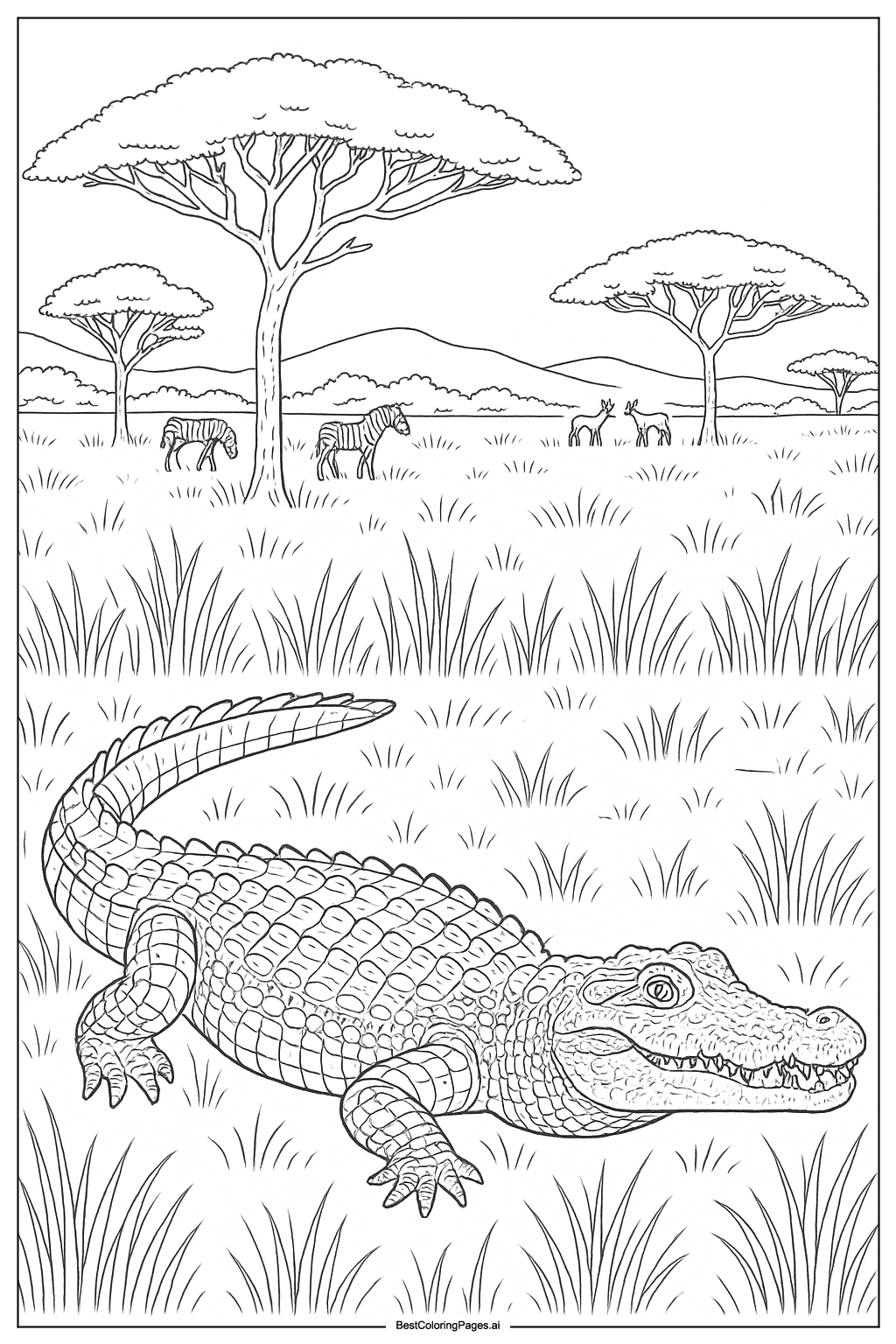
This coloring page offers excellent benefits for developing fine motor skills. The intricate scales of the crocodile require precise pencil control, helping children refine their grip and hand-eye coordination. It also serves as a wonderful educational tool to spark curiosity about African wildlife and geography. Parents and teachers can use this scene to discuss the ecosystem of the savannah, explaining the difference between predators like crocodiles and herbivores like zebras. Additionally, the complexity of the image promotes patience and focus, as completing the detailed texture of the reptile and the surrounding grass takes time and sustained attention.
How difficult is it to color Crocodile in African safari Coloring Page, and what tips can help?
What are the best color suggestions for Crocodile in African safari Coloring Page?
To bring this African safari to life, try using earth tones. For the crocodile, blend shades of olive green, brown, and grey to give its scales a tough, leathery look; you can leave the belly a lighter cream color. Since this is the savannah, the grass doesn't have to be bright green—try using golden yellow, tan, or ochre to look like dry, sun-baked grass. This will also help the green crocodile stand out! For the background, color the acacia trees with dark brown trunks and deep green tops. Don't forget the distant animals: keep the zebras black and white, and make the antelopes a soft light brown. A bright blue sky will make the whole scene pop.