
What are the benefits of coloring Crocodile eating fish Coloring Page?
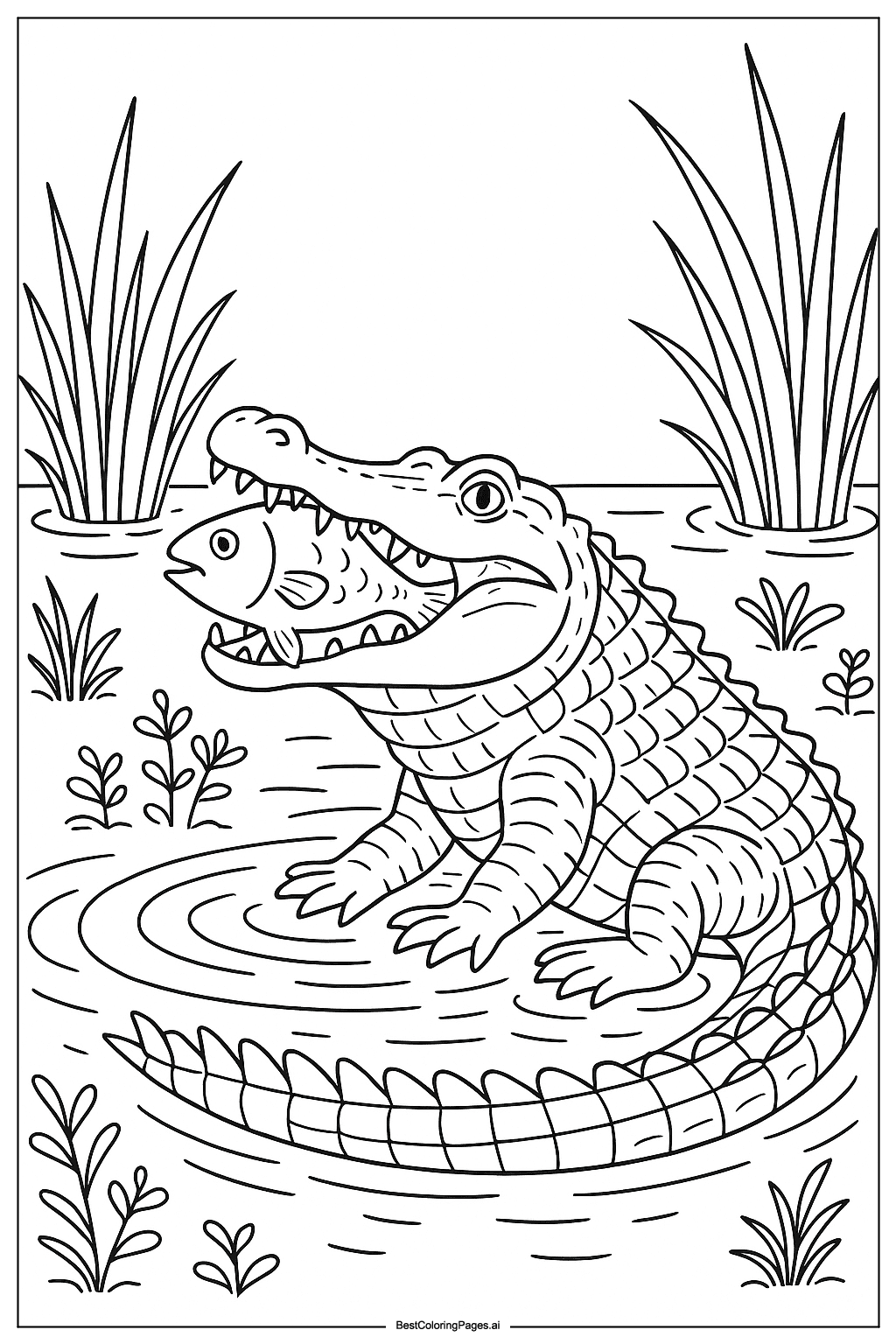
Coloring this scene helps children improve their fine motor skills. Filling in the small scales on the crocodile's back requires precise hand movements, which strengthens the muscles used for writing. It also teaches patience and focus, as the pattern is repetitive and requires attention to detail. Additionally, this page is a great science lesson! It introduces children to the concept of the food chain and predator-prey relationships in the wild. While coloring, parents can talk about where crocodiles live (habitats), what they eat, and how they use camouflage in the water. It encourages curiosity about biology and nature while allowing kids to express themselves artistically.
How difficult is it to color Crocodile eating fish Coloring Page, and what tips can help?
What are the best color suggestions for Crocodile eating fish Coloring Page?
For the crocodile, try using different shades of green to create a realistic look. You can use a dark forest green for the bumpy scales on its back and a lighter, yellowish-green for its smooth belly and face. This contrast will help show the texture of the skin. For the fish, choose a bright color like silver, orange, or shiny blue so it stands out against the green crocodile. Don't forget the background! You can use a mix of blue and brown for the water to make it look like a murky swamp. The tall grass should be a vibrant green. If you are finding the small scales hard to color, try using colored pencils or fine-tip markers for those tiny areas, and save your crayons for the larger water sections.