
What are the benefits of coloring Baby crocodile Coloring Page?
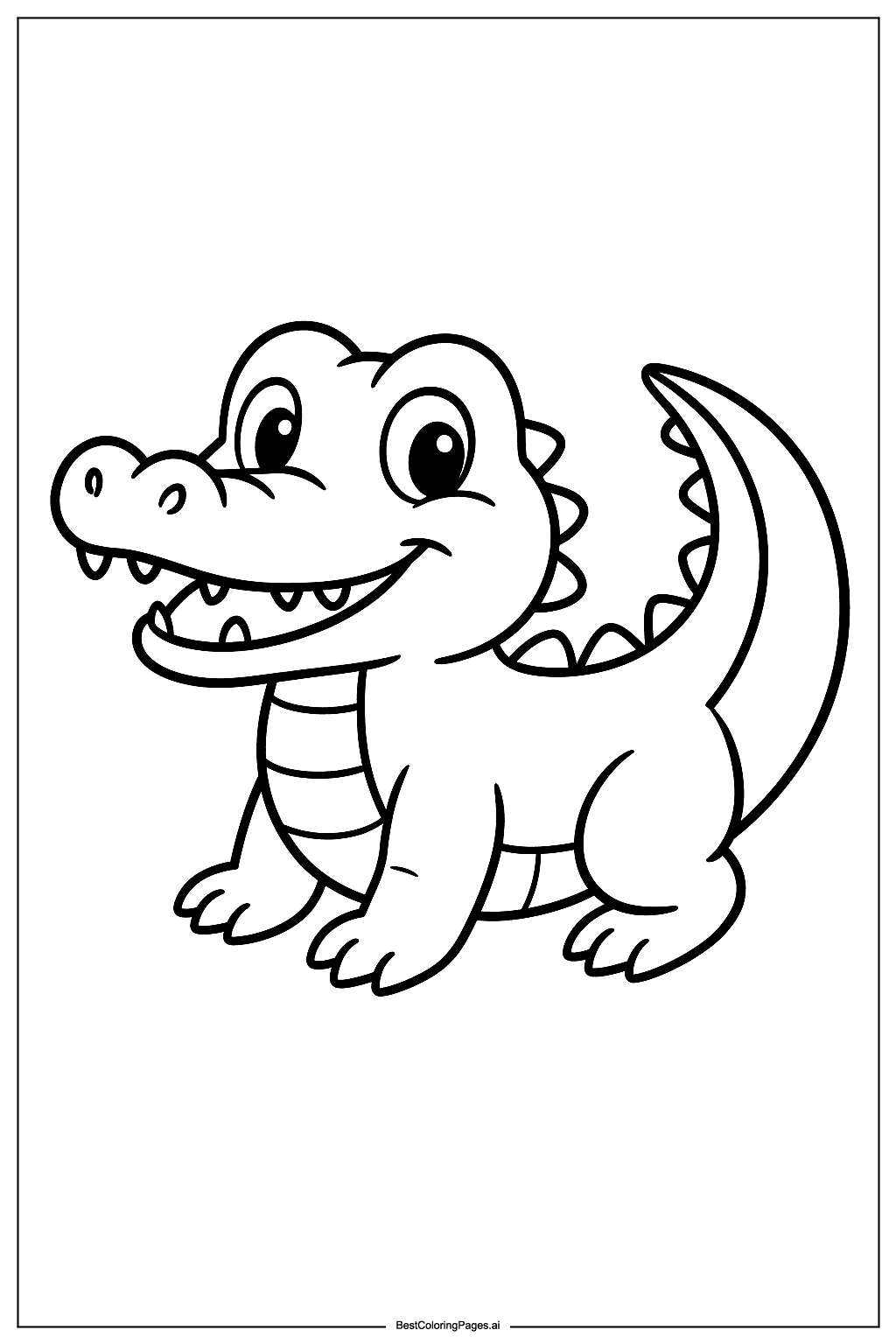
Coloring this baby crocodile offers several developmental benefits for children. First, it improves fine motor skills. Holding a crayon or pencil and controlling it to color inside the small teeth and toes strengthens the muscles in the hands and fingers. This is essential for writing practice. Second, it boosts concentration. Focusing on the different sections, like the belly stripes and the back spikes, requires attention to detail. This helps children learn patience and how to finish a task. Third, it sparks creativity and imagination. While real crocodiles are green, a coloring page allows for endless possibilities. Children can choose to make a purple, blue, or rainbow crocodile. Finally, it provides a calm moment to relax and reduce stress while learning about animals and nature.
How difficult is it to color Baby crocodile Coloring Page, and what tips can help?
What are the best color suggestions for Baby crocodile Coloring Page?
For a classic look, try using different shades of green. You can use a bright lime green for the body and a darker forest green for the spikes on his back. For the tummy stripes, a pale yellow or cream color works perfectly to show contrast. Don't forget the mouth! A soft pink looks great for the inside of the mouth, but be careful to leave the teeth white so they shine. If you want to be creative, who says a crocodile has to be green? You could color him light blue with purple spikes for a fantasy look! Use colored pencils or thin markers for the small areas like the toes and teeth. For the big body parts, crayons work well to fill the space quickly. You can also add a blue puddle underneath him to show he is near the water.